The last day
14 August 1914: nineteen names, one date
The Rozenburg painters' register does not end with a closing sentence, but with a date. Beside nineteen names stands the same: 14 August 1914. Two weeks earlier, the Dutch government had declared general mobilisation.
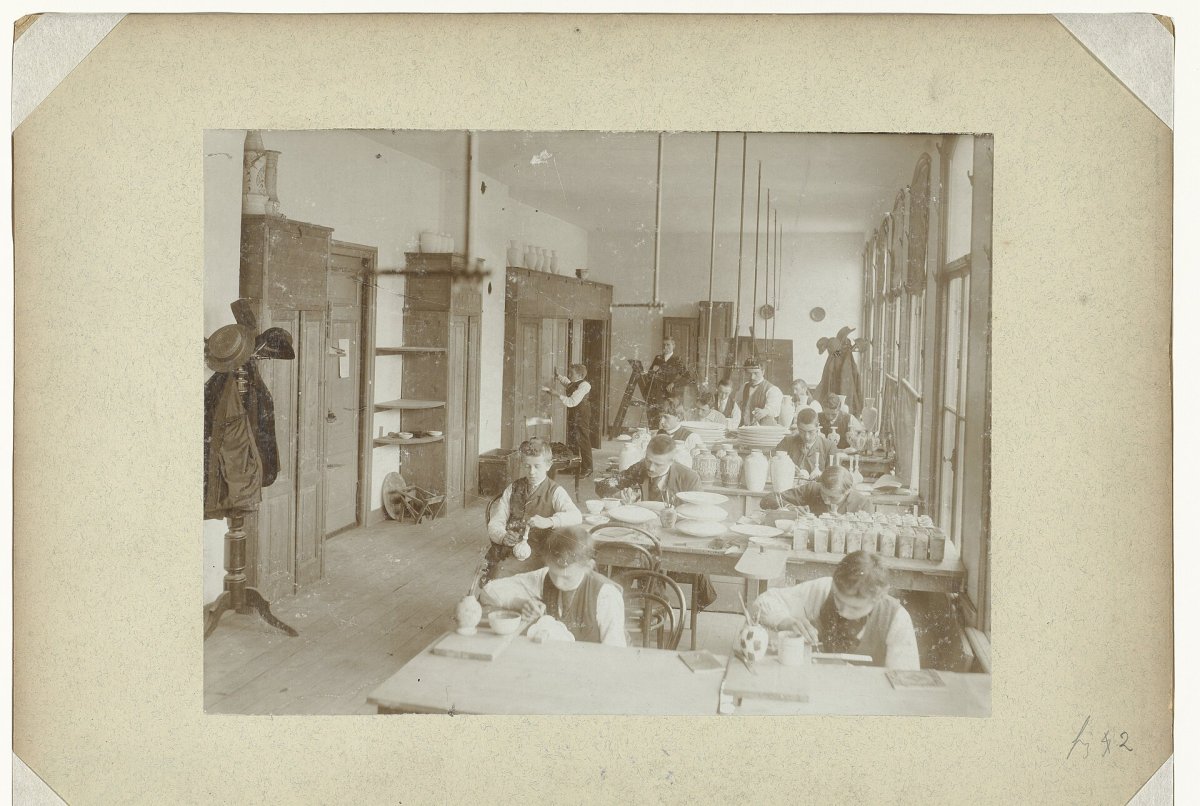
Anyone leafing through the register of the painting workshop sees a factory that breathes. Every year, boys and girls of twelve or thirteen come in; every year a few leave. In 1914 that rhythm changes. In February, March and April, seven leave, among them master Jac Brouwer, who had worked at the factory since 1896, and V.C. Andreoli, who had been there for over seventeen years. In May, three more leave, and on 31 July master Frederik Anslijn. And then, on a single day, nineteen at once.
Yet that spring, people were still being hired. On 9 May 1914, the register enters three names: thirteen-year-old Alijda Siliacus, a ‘Miss Heijman’ and Teunis van Wijnbergen, who had been gone for almost a year and returned as a journeyman. Three months later, they too are on the list of the last day.
Nineteen names
On Friday 14 August 1914, the register ends for everyone still working in the painting workshop at that point. They are two masters, nine painters, three journeymen and five apprentices. Ages and starting years according to the register:
- Sam Schellink, aged 38, master, since 1892
- Jacob van Rossum, 33, master, since 1895
- Leendert Hakker, 28, painter, since 1898
- Jasper Burghout, 29, painter, since 1899
- C.W.J. ’t Hart, 29, painter, since 1899
- Leenderd de Weij, 28, painter, since 1899
- Josephina Bordat, 27, painter, since 1901
- Antonius Limburg, 27, painter, since 1901
- Martha Loos, 27, painter, since 1902
- Cornelis van Wezenberg, 26, painter, since 1902
- Johannes Marijnissen, 21, painter, since 1906
- Teunis van Wijnbergen, 17, journeyman, since 1910
- Cornelia Verel, 16, journeyman, since 1910
- Johannes Bink, 15, journeyman, since 1912
- Bertha Mica, 14, apprentice, since 1913
- Maarten Verhoog, 14, apprentice, since 1913
- A.C. Nanning, apprentice, again since November 1913
- Alijda Siliacus, 13, apprentice, since May 1914
- Miss Heijman, apprentice, since May 1914
Together they had worked more than 170 years in the painting workshop. Almost all of them had come in as children of twelve to sixteen.
Why precisely then?
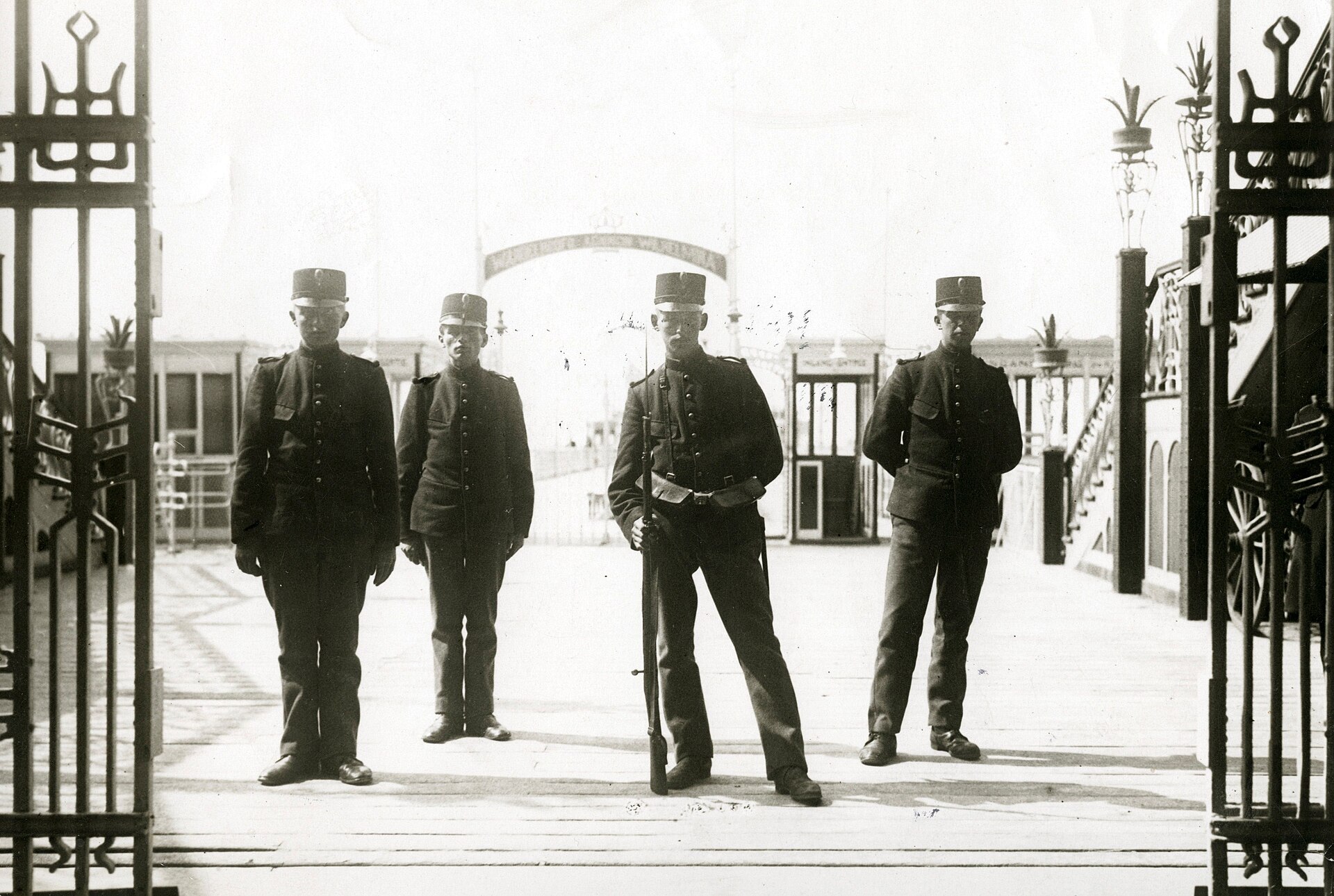
The register gives no reason. It records only dates, as it had done for twenty-five years. But the date speaks for itself. On 28 July 1914, Austria-Hungary declared war on Serbia. On 31 July, the Dutch government proclaimed general mobilisation, and tens of thousands of men had to report within a few days. On 4 August, the German army entered Belgium. The Netherlands remained neutral, but for a factory that made costly and fragile porcelain for buyers at home and abroad, the timing could hardly have been worse.
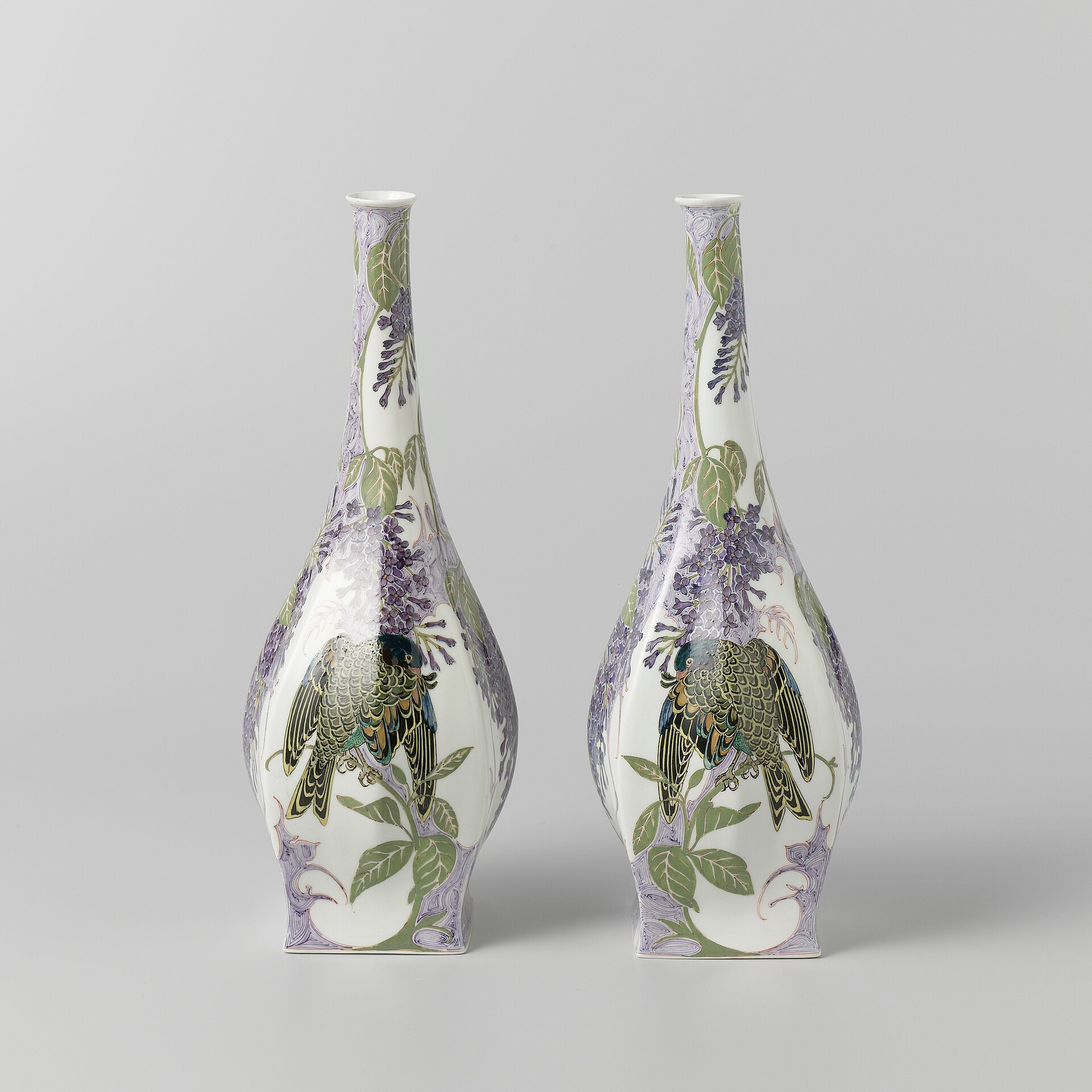
In the literature, 1914 is named as the year in which Rozenburg stopped making eggshell porcelain. The register shows what that looked like on the floor. The masters of the eggshell porcelain, Schellink and Van Rossum, leave on the same day as the apprentices who had only just begun. Director J. Jurriaan Kok had already left the factory in 1913. The company itself existed until 1917, but the painting workshop as the register knew it was over.
Still in May
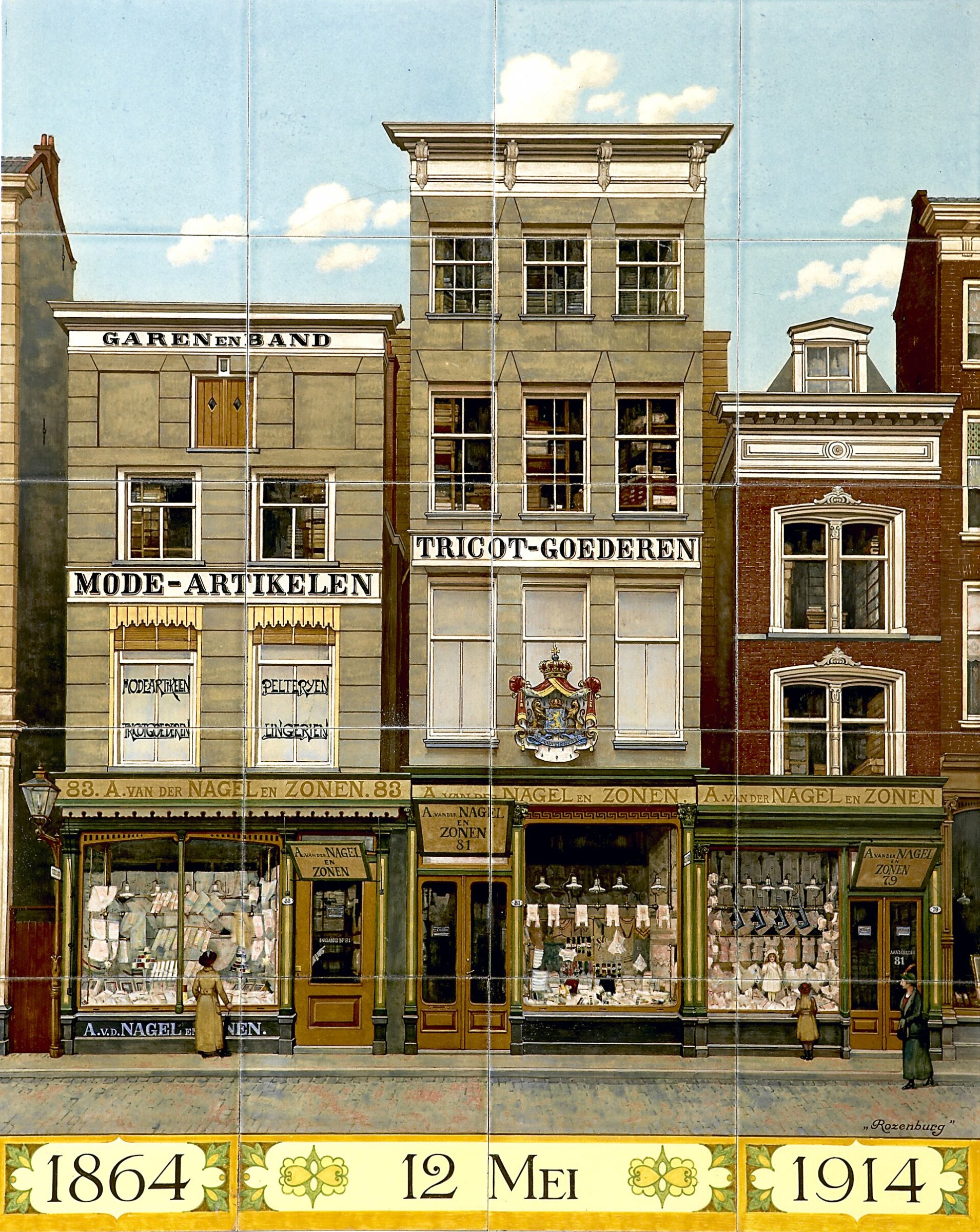
How ordinarily the work continued until shortly before is shown by a tableau in Museum Rotterdam. The draper's shop A. van der Nagel en Zonen on the Hang in Rotterdam turned fifty on 12 May 1914, and for the occasion a tile tableau came from Rozenburg: four by five tiles with the shop premises, their window displays and their signs, “Yarn and ribbon”, “Fashion articles”, “Knitwear”. The museum suspects it was painted from a photograph. It is work in a long tradition: a photograph as model, a painter who transfers the scene onto tiles.
Afterwards
For most of the nineteen, the trail stops at the register. Of a few we know how things went on. Sam Schellink worked for himself for a time and dealt in art; in 1918 he went to Amphora in Oegstgeest and later to Goedewaagen in Gouda. Jacob van Rossum became a painter, watercolourist and etcher in The Hague and later Rijswijk. Leendert Hakker remained a pottery painter, in Waddinxveen and then in Gouda. Johannes Marijnissen, who had only just become a painter, worked from the early 1920s at De Porceleyne Fles in Delft. Of Josephina Bordat, who had worked there for thirteen years, we only know that she continued to live in The Hague.
And the youngest? Alijda Siliacus was thirteen and had spent three months in the painting workshop. Bertha Mica and Maarten Verhoog were fourteen. They belonged to the last intake of a training that had shaped hundreds of boys and girls since the 1880s. What they did afterwards, the register does not tell. It stops, in the middle of summer, on a Friday.
Painters in this story
- Vincentius Cornelis Andreoli
- Frederik Wilhelmus Hendrik Anslijn
- Johannes Jacobus Bink
- Josephina Eva Cornelia Bordat
- Jacob Marinus Gerardus Brouwer
- Jasper Burghout
- Thomas Coesel
- Leendert Hakker
- Cornelis Willem Johannes 't Hart
- mej. Heijman
- Antonius Hendricus Limburg
- Martha Antonetta Loos
- Johannes Casper Wilhelm Marijnissen
- Bertha Frederika Mica
- Adrianus Cornelis Nanning
- Jacobus Willem van Rossum
- Samuel Schellink
- Alijda Marie Siliacus
- Cornelia Verel
- Maarten Verhoog
- Leenderd de Weij
- Cornelis Charles van Wezenberg
- Teunis van Wijnbergen
Sources: Schildersregister Rozenburg, zoals verwerkt op deze site (loopbaangegevens per schilder) · Monografie Rozenburg (Haags Gemeentemuseum), voor het einde van de productie op 21 augustus 1914 · Rijksmuseum Amsterdam, BK-1967-198-A · Museum Rotterdam, objectnr 80878 · Spaarnestad Photo, SFA022801503 · RKD en eerdere literatuur over de afzonderlijke schilders (zie hun pagina’s op deze site)