Women in the painting workshop
Albertina Wijnhoff became the only female master. After her came dozens.
Around 1890, only men and boys worked in the Rozenburg painting workshop. Ten years later, girls of thirteen came in, sometimes four in a single day. The painters' register shows how that happened, and how exceptional Albertina Wijnhoff was.
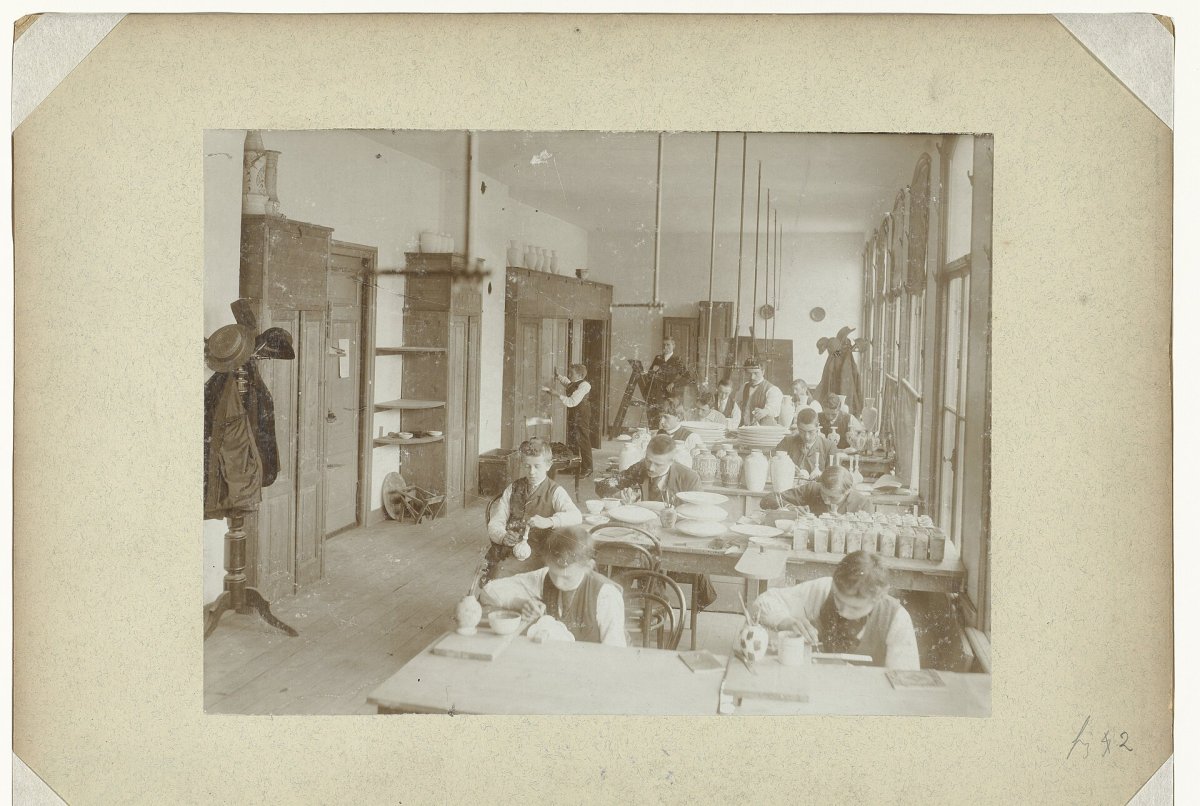
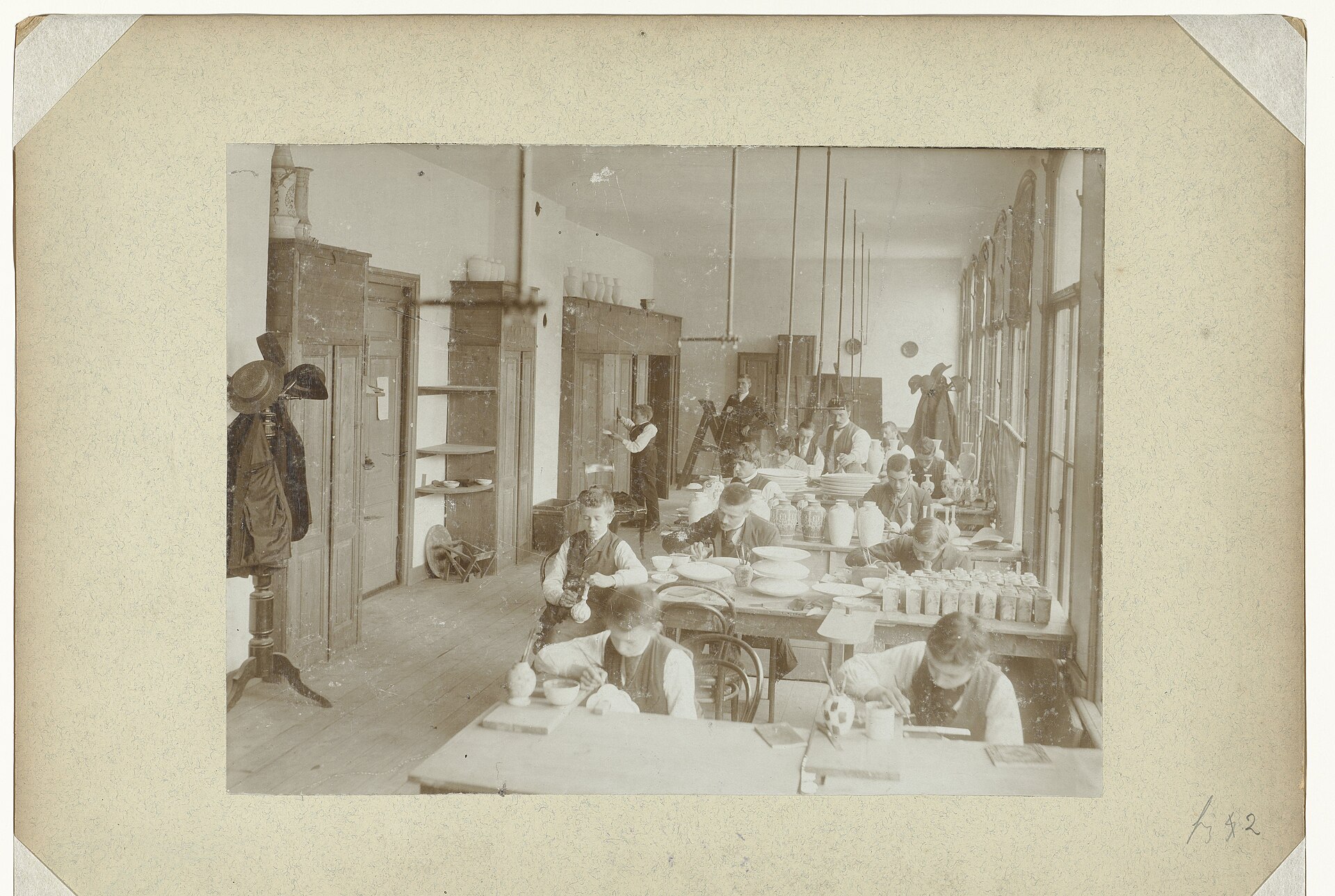
In the photograph that the Hague photographers Ritscher & Landsman took of the painting workshop around 1890, only men and boys are seated. That is also how it appears in the Rozenburg painters' register: in the first years it is a man's world. The first woman's name to appear is that of Celia Maria Willemse-Collings, a forty-year-old from Rotterdam, who starts as an apprentice in November 1891 and leaves again in March 1892.
Two years to master
On 28 October 1892, two new apprentices started in the painting workshop. One was Sam Schellink, sixteen years old, whose name would later become bound up with Rozenburg's eggshell porcelain like no other. The other was Albertina Everarda Wijnhoff, a nineteen-year-old from The Hague.
What happened next is exceptional. Wijnhoff became a journeyman and painter in 1893, and in 1894 the register recorded her as a master. Schellink needed until 1897 for that. Of the eighteen painters who rose to master in the register, Wijnhoff is the only woman.
In grey and sepia
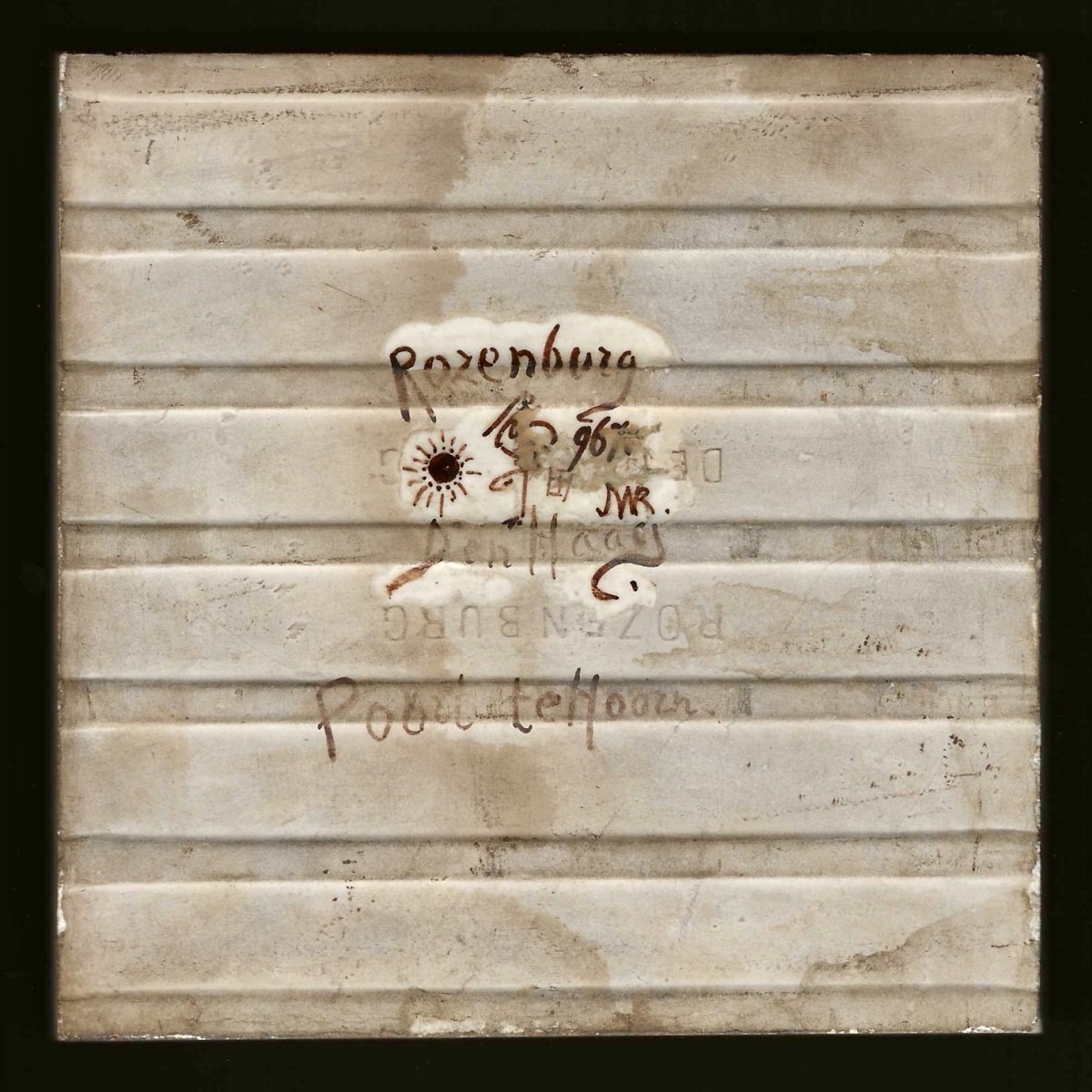
Wijnhoff worked in the years when Rozenburg concentrated heavily on tiles and tableaus. Museum Goedewaagen, which has described the Rozenburg tableaus from this period, points to a distinctive style. Where De Porceleyne Fles often executed monumental tableaus in Delft blue, at Rozenburg in those years they were painted monochrome, in grey and sepia. The result recalls the photography of that time.
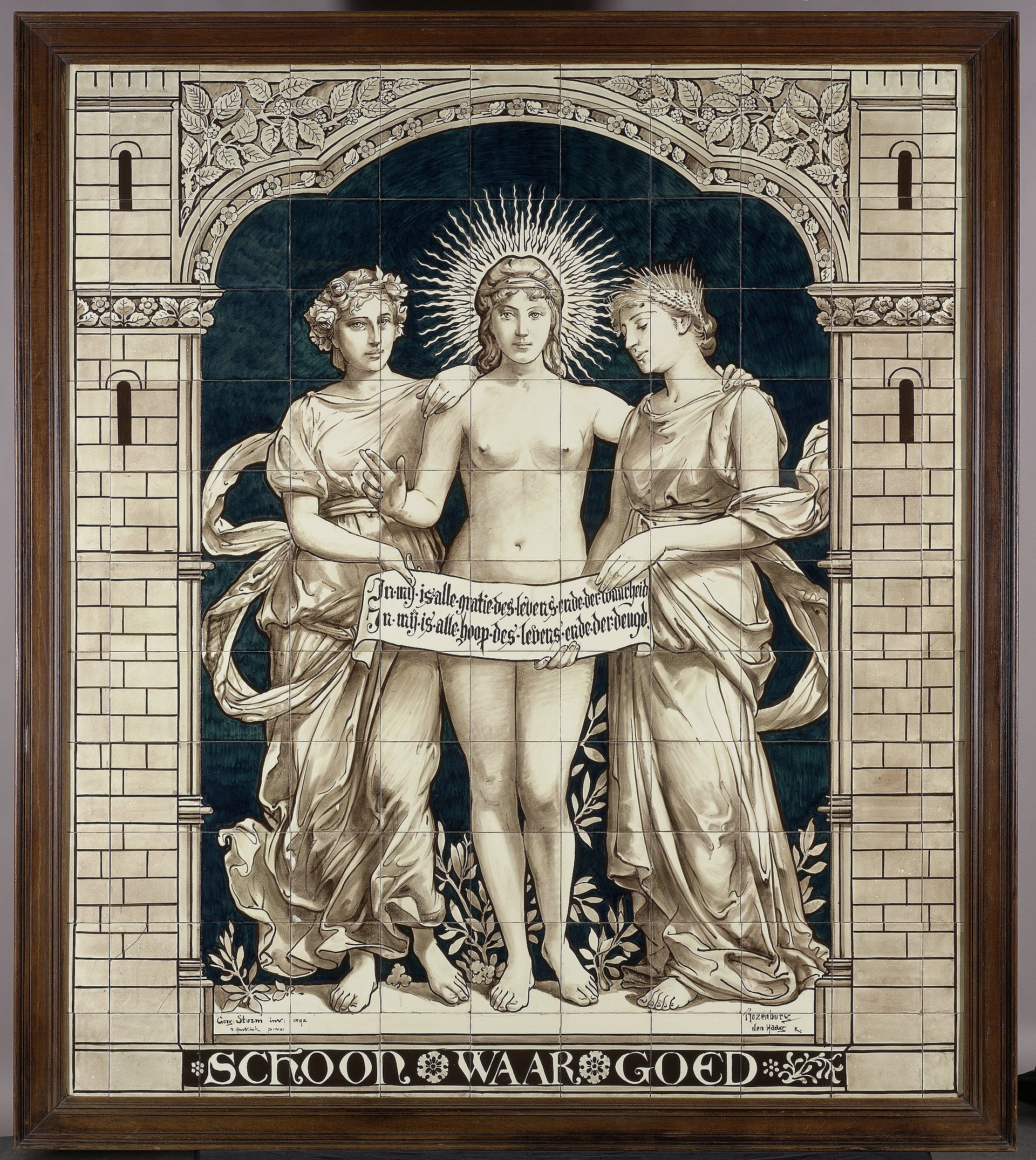
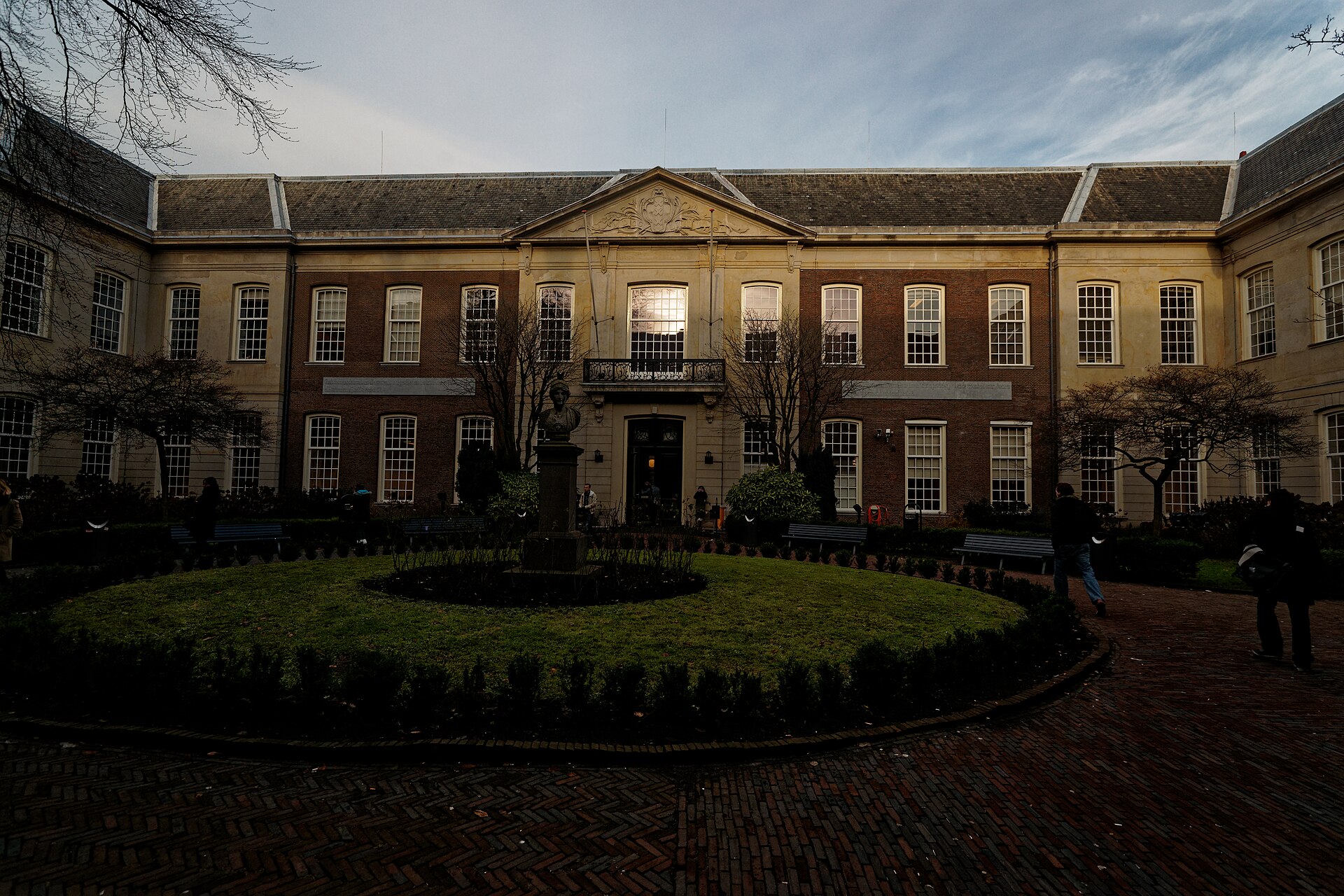
Her best-known work is such a tableau: the courtyard of the Oudemanhuispoort, the building of the Amsterdam university, with Stracké's statue of Minerva. The tableau, from around 1894, belongs to the Meentwijck collection and was on loan at Museum Goedewaagen. This site attributes seven work orders from the years 1893 to 1896 to her, and nine objects.
Her last date in the register is 16 October 1896. She was twenty-three. After that her trail has not been recovered: no later employer, no date of death. A marriage and a different surname are plausible, but that is a conjecture, not a fact.
The great influx
After Wijnhoff, women remain an exception for some time. In the summer of 1892, two girls of thirteen and fourteen appear in the register for a few months. On 30 May 1896, four women come in at once, two of whom, ‘Miss Arbeiter’ and ‘Miss Sallaert’, straight away as journeymen. They also leave together, on 5 February 1897. In September 1896, Koosje Moret follows, thirty years old, who two years later would marry master Daniël Harkink.
Then it shifts. From 1901, the girls come in groups. That year fourteen are registered, in 1902 eleven, in 1903 nine. On 23 March 1901, four start on a single day: Josephina Bordat, Ida Manders, Anna Witte and Francisca van Rinsum. Most are between twelve and sixteen years old. Of the at least 57 women and girls in the register, more than half began in those three years.
Why precisely then, the register does not say. It coincides with the first years of the eggshell porcelain, the production of which began in 1899.
Who stayed
For many it was brief. Twenty-seven women and girls appear in the register as apprentices who did not complete their training. Elisabeth Bronkhorst stayed twenty days, ‘Miss Starre’ three weeks. Twelve women became journeymen. Five reached the rank of painter: Agatha van de Water, Hendrika Laurie, Martha Loos, Anneke van de Koppel and Josephina Bordat.
Bordat and Loos held out the longest. Bordat began as a thirteen-year-old in March 1901, Loos as a fourteen-year-old in June 1902. Both worked until the last date in the register, 14 August 1914. By Bordat, this site has a large peacock vase from 1911, which she painted together with Leenderd de Weij.
Afterwards
What the women did after Rozenburg is mostly unknown. There are a few traces. Cornelia Bloemink, who worked in the painting workshop from 1903 to 1908, became a graphic artist and etcher under the name Devivier-Bloemink; she was a pupil of Richard Bisschop. Maria de Haas, at Rozenburg from 1901 to 1906, continued to paint as an amateur and married the artist and musician Jacques Meijer. Koosje Moret went with Harkink to Gouda.
Besides Bordat and Loos, four younger women and girls still appear in the register in the summer of 1914: Cornelia Verel (sixteen), Bertha Mica (fourteen), Alijda Siliacus (thirteen) and a ‘Miss Heijman’. The last two had only started on 9 May. For them too the register ends on 14 August 1914.
Albertina Wijnhoff remained an exception: after her, no woman reached the rank of master again. But she was not the only one who learned the trade. Between 1891 and 1914, dozens of women and girls sat at the tables of the painting workshop, most of them briefly, a few for thirteen years. Anyone who knows their names looks differently at a Rozenburg piece by an unknown maker. It may just as easily have been painted by one of them.
Painters in this story
- mej. Arbeiter
- Cornelia Johanna Bloemink
- Josephina Eva Cornelia Bordat
- Maria de Haas
- Daniël Harkink
- mej. Heijman
- Anneke Alberta van de Koppel
- Hendrika Margaretha Laurie
- Martha Antonetta Loos
- Ida Margaretha Adriana Manders
- Bertha Frederika Mica
- Koosje Moret
- Francisca Louise Wilhelmina van Rinsum
- mej. Sallaert
- Samuel Schellink
- Alijda Marie Siliacus
- Cornelia Verel
- Agatha Anna Maria van de Water
- Albertina Everarda Wijnhoff
- Celia Maria Willemse-Collings
- Anna Louise Witte
Sources: Schildersregister Rozenburg, zoals verwerkt op deze site (loopbaangegevens per schilder) · Museum Goedewaagen, “Rozenburg tegeltableaus 1892–1899” en “Rozenburg monochrome tableaus 1892–1895” · RKD, C. Devivier-Bloemink en M. de Haas · Wikipedia, “Daniel Harkink” · beeld: Rijksmuseum Amsterdam en Wikimedia Commons