Homesick for the outdoors
A letter from 1912 opens the door of the early painting workshop
In July 1912, Hendrik David Schild put his memories of Rozenburg on paper. It is the liveliest testimony we have of the factory in its earliest years: a house where painters came and went, a pile of little tiles that nobody wanted to buy, and a drawer full of photographs of Mauve.
On Friday 5 July 1912, Hendrik David Schild, in The Hague, writes a letter to a “Right Honourable Sir”. The addressee is probably the art critic Albert Plasschaert; the text has survived and can be read through the RKD. Schild is then almost forty. He has not worked for Rozenburg for years, but what he sets down in a few paragraphs is the best eyewitness account we have of the factory in the 1880s.
Among young artists
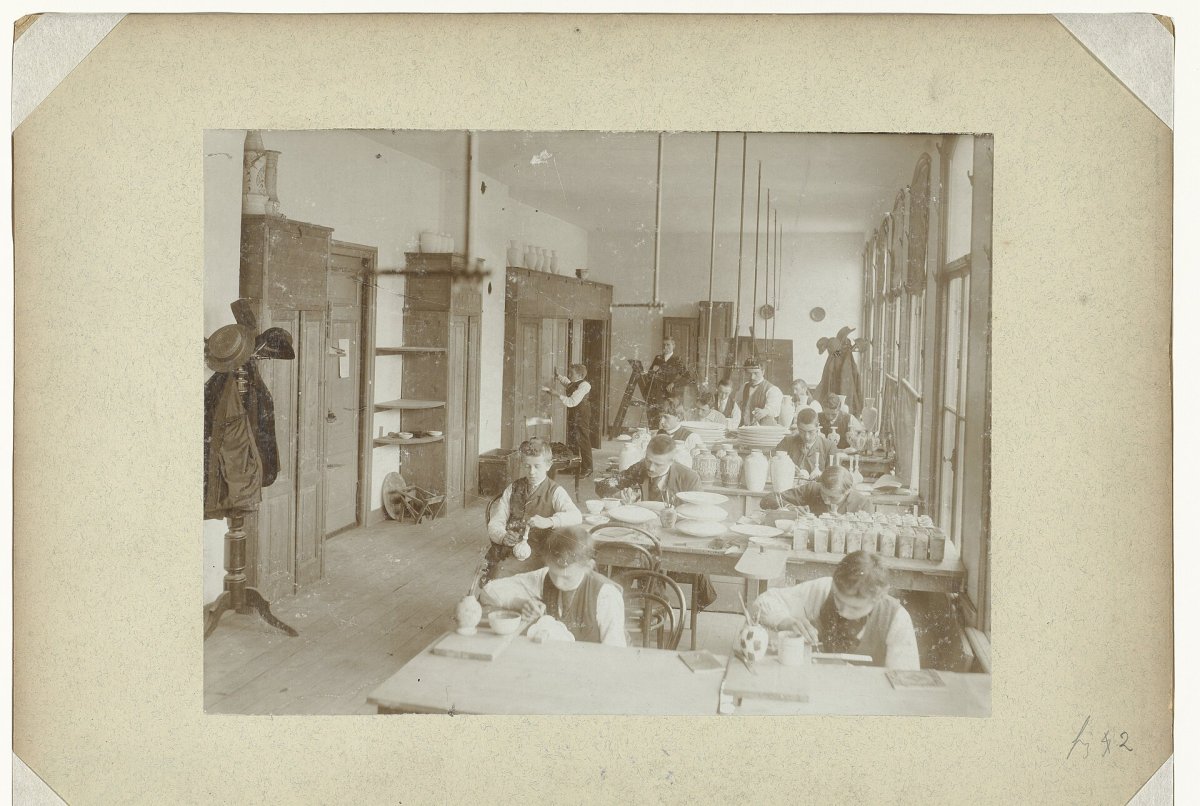
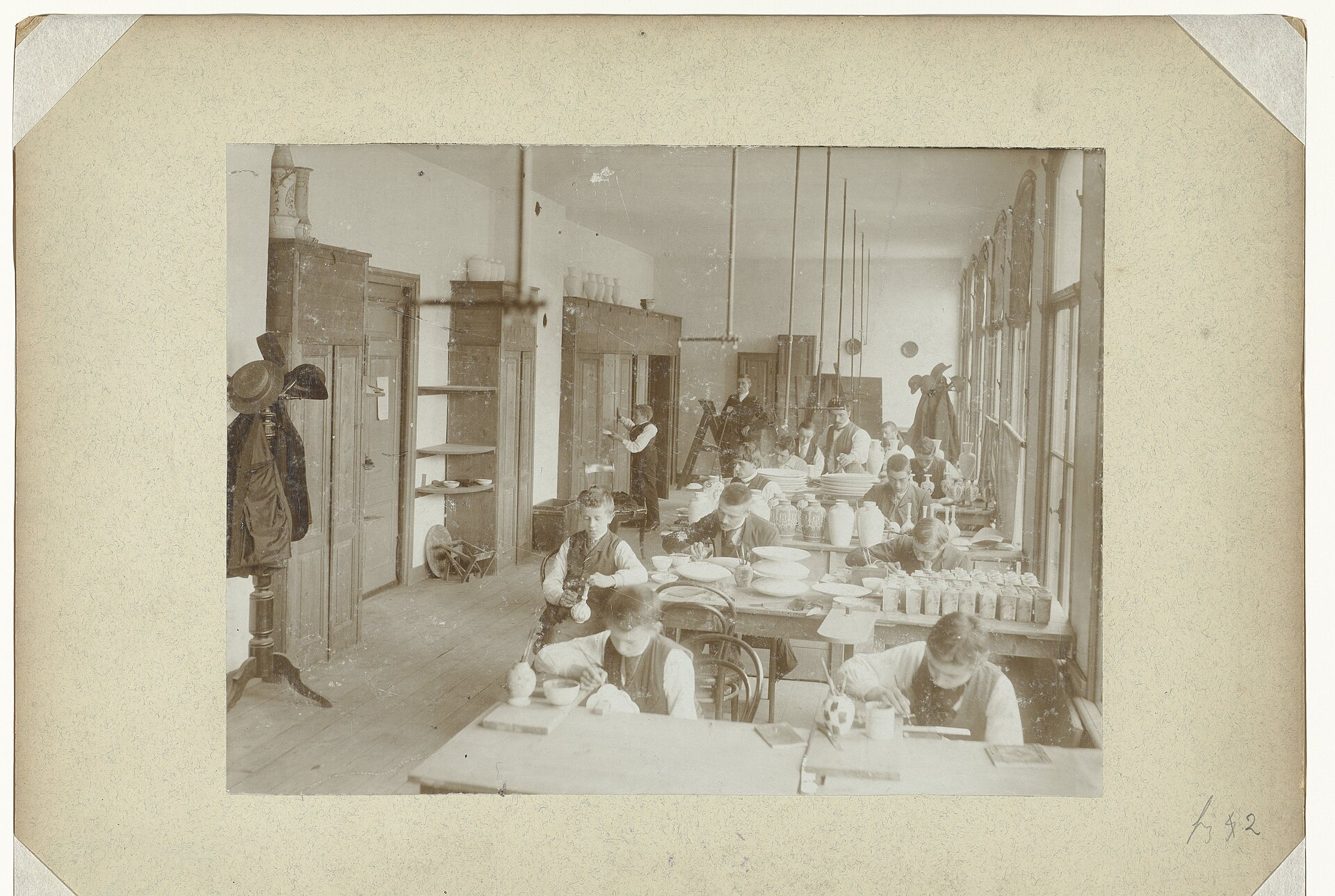
He came to the factory, he writes, “in my 13th year”: around 1885 or 1886. There he found himself “among young artists, such as Colenbrander, De Zwart, Koppenol, Leurs, Harkink, W.B. van Horssen”. Theo Colenbrander, the artistic director, was already in his forties by then, but to a boy of thirteen they were all artists. “There I was of course encouraged to paint,” he writes. And there were visitors: “Mesdag, Israels, Henkes, De Bock would sometimes drop in too.”
Why the great names of the Hague School came by, Schild explains at once:
“It happened like this: the fine old country house in which R was then established had long been lived in by painters. Willem Maris had had a studio there, and De Zwart too still kept his studio there when the factory was already established in it.”
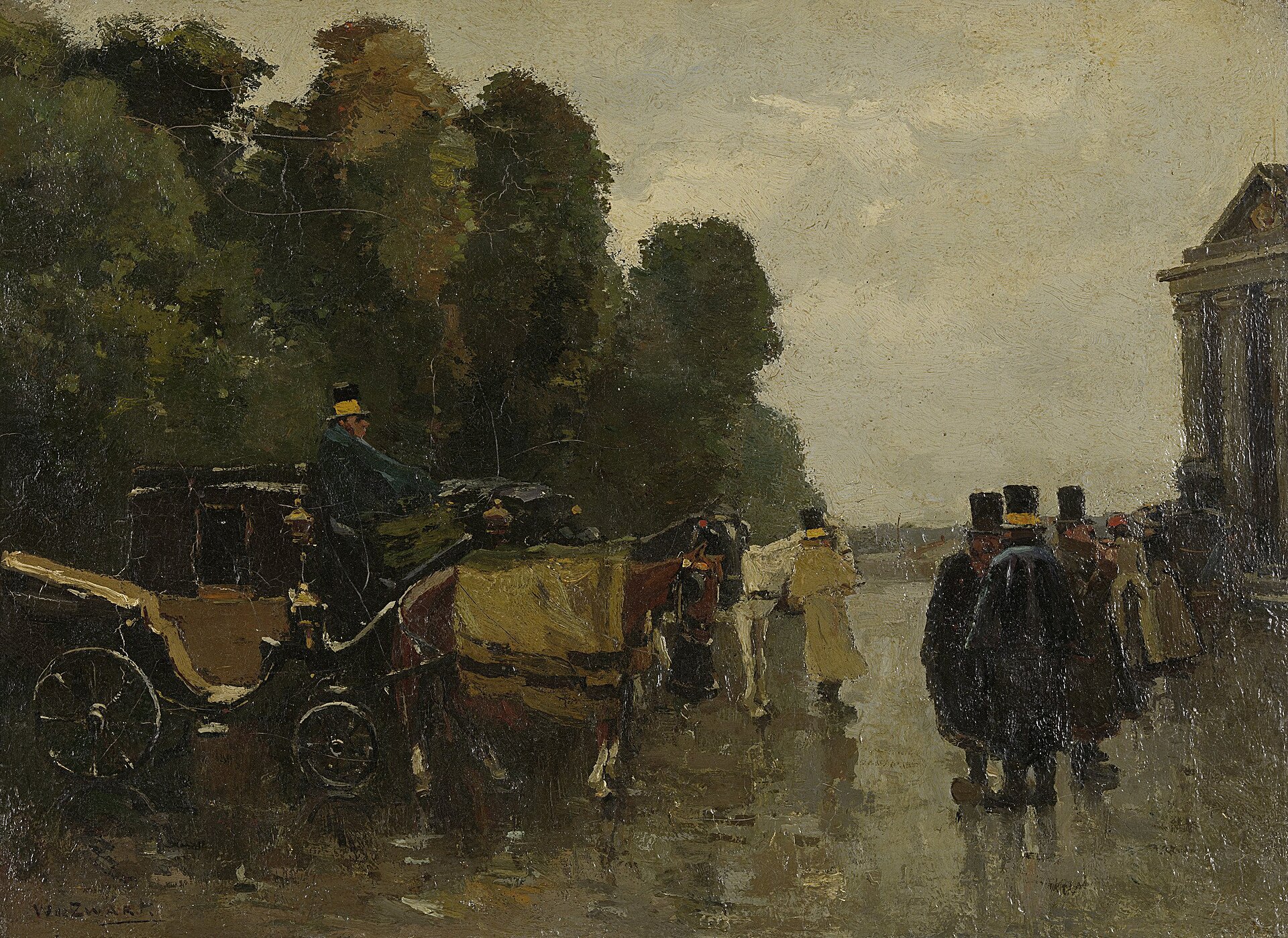
It is a surprising picture: a factory that nestles into a house the Hague painters already knew, where Willem Maris had worked and where Willem de Zwart simply kept his studio. In those years the line between the painting workshop and the artist's studio was thin.
A pile that would not shrink
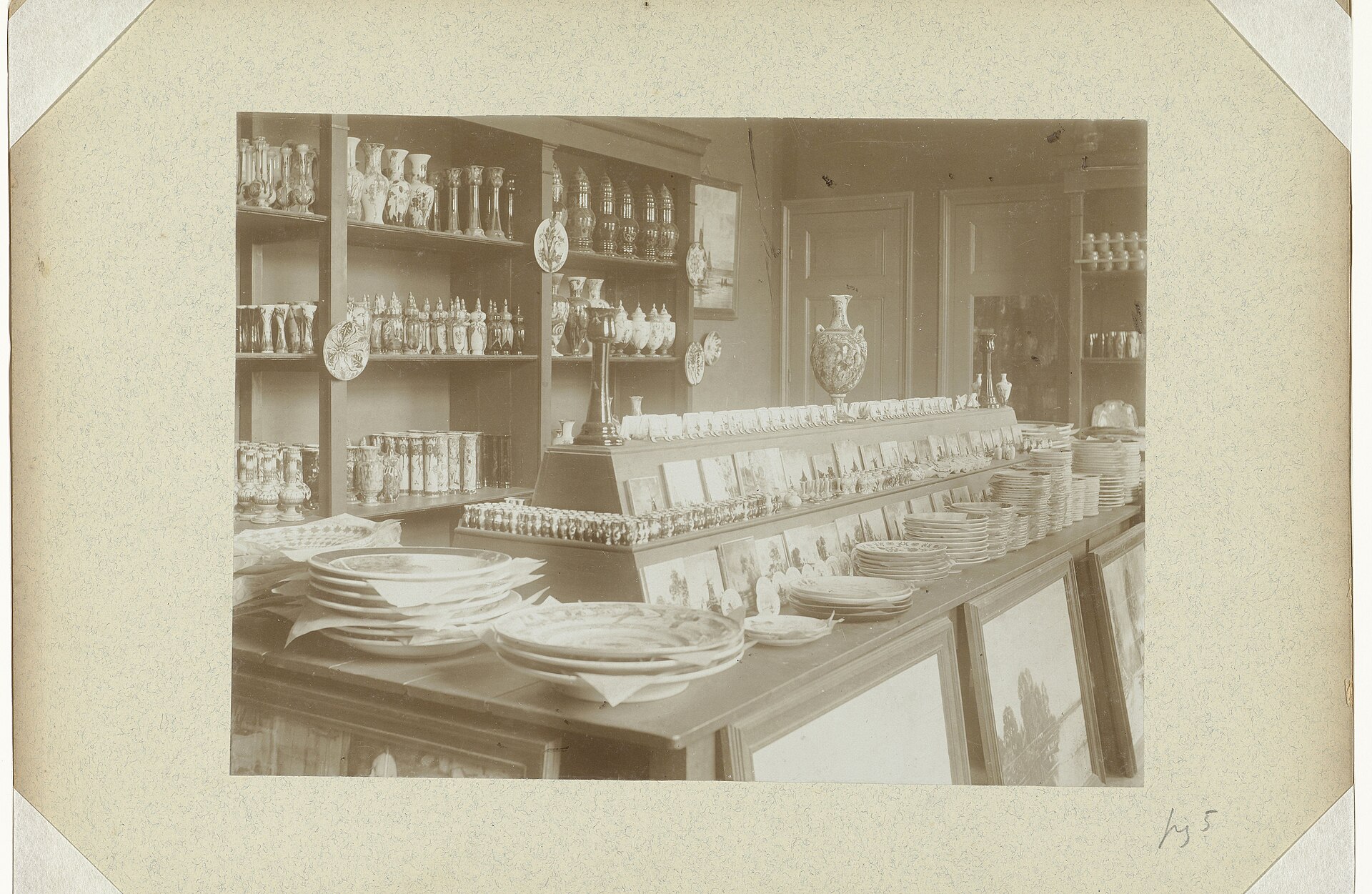
De Zwart painted many tiles in that period. Schild describes them with visible affection: “mostly simple in subject, but very beautifully done”. Buyers were not to be found. The little tile paintings “simply could not suit the taste of the day”, so that the pile on the floor and against the wall kept growing. Then follows the finest sentence of the letter:
“they were not even stolen; that privilege fell only to certain jugs and vases.”
It is the dry joke of someone who knew the factory from the inside. What disappeared was what the market wanted: jugs and vases. What was left lying around were the small paintings on tile. Schild knew very well which he found more beautiful: “They actually appealed to me more than the jugs.”
Feasting on Mauve
Later Schild was “elevated to ‘tableau painter’”, and he was “rather glad” of it. A tableau painter transferred large scenes onto tiles, and those scenes often came from the Hague School. The reference material lay in a drawer:
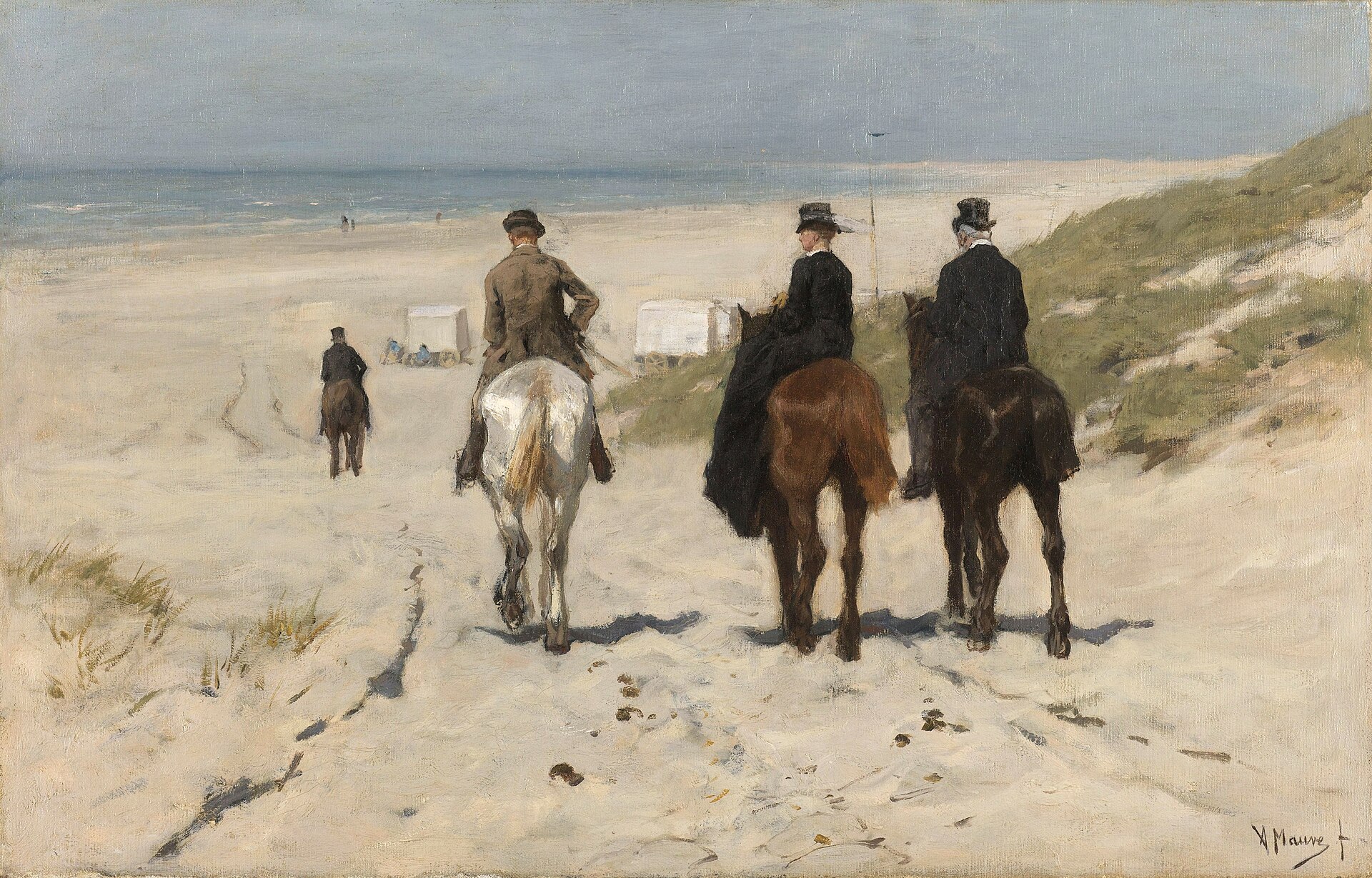
“That was just feasting on Mauve, Weissenbruch, Neuhuis all day long. We had a whole drawer full of photos, mostly Mauve's, and you could stand hanging around by that drawer for such a long time, enjoying one photo after another.”
That is a precious detail. It shows how the Hague School entered the factory: not only through the painters walking around there, but also through photographs of their work. Many early Rozenburg tableaus from the early 1890s are painted in a single colour, in shades of grey and brown. The result recalls the photographs of that time.
What the register tells us
The factory's painters' register shows how quickly things went for him. Schild was a painter in 1889 and already a master in 1890, aged eighteen. After an interruption from 1893 to 1895 he returned, and until July 1902 he is again recorded as a master. This site attributes five work orders from the years 1893 to 1901 to him, including a seascape after H.W. Mesdag that he painted together with Daniël Harkink.
His memory differs here and there from the records. He writes that he stayed at Rozenburg “until 1901”; the register puts it at 4 July 1902. He gives his birthday as 1 September, whereas the register and the RKD give 7 September 1872. These are the small shifts that creep into every look back. The letter is not an administration, but a memory.
Three free days
After Rozenburg, Schild went to “the Gouda factory”, where he worked until 1907, “on a contract of 3 free days a week”. He needed those free days. For the copying, he writes at the end of his letter, had done something to him:
“that copying gives one such a homesickness for the outdoors”
In that single sentence lies the whole art of tile painting of those years. The tableau painters brought the dunes, the cloudy skies and the light of the Hague School indoors, onto tiles, in a hall with long tables. Anyone who spent all day copying Mauve eventually wanted to go outside himself. Schild did just that. The RKD records him as a painter, watercolourist and decorative painter, with places of residence in The Hague, Loosduinen, Gouda and finally Alphen aan den Rijn, where he died in 1928.
His letter is a small document, but it changes the way we look at the early Rozenburg tiles. Behind the tableaus were young painters who knew the Hague School not only from photographs but also had it come to their door, and who, like Schild, in time wanted to go outside themselves.
Painters in this story
Sources: Brief van H.D. Schild, Den Haag, 5 juli 1912, vermoedelijk aan A. Plasschaert (RKD, excerpt 34) · RKD, H.D. Schild · schildersregister Rozenburg, zoals verwerkt op deze site · Museum Goedewaagen, “Rozenburg monochrome tableaus 1892–1895” · beeld: Rijksmuseum Amsterdam, via Wikimedia Commons