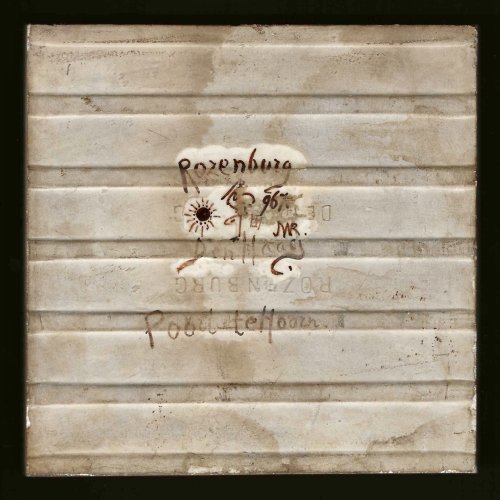
Work order 967
- Year mark
- Zon (1902)
- Dating
- August 11, 1902
- Order book
- 708, part 1, page 21
- Order
- Tiles · 12 pieces
- Cost price
- ƒ2.35 per piece · What it cost ↓
Objects (1)
Tile✦ In my collection
Koepoort te Hoorn
- Painter
- Rossum, Jacobus Willem van
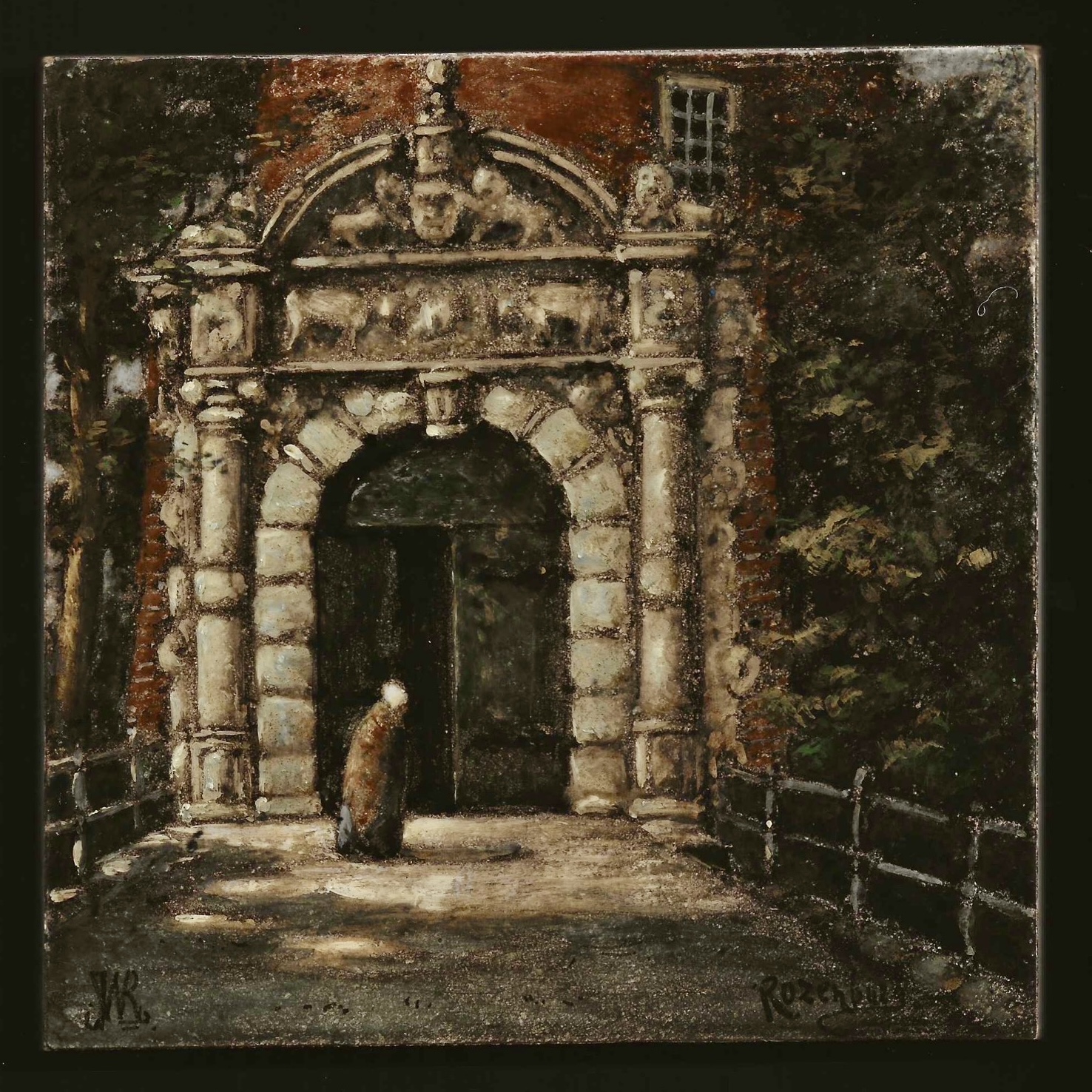
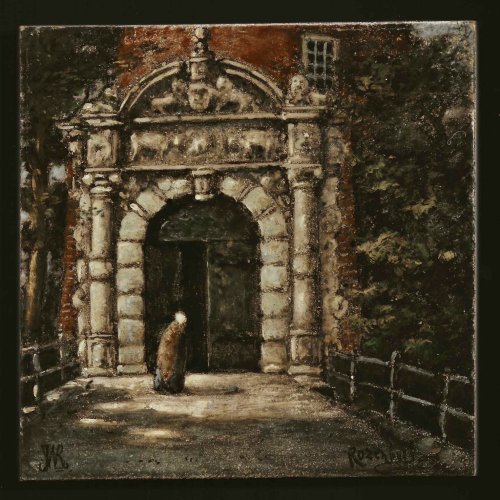
This decorative tile from the Rozenburg Porcelain and Pottery Factory in The Hague features an atmospheric and nostalgic view: the historic Koepoort in Hoorn, viewed from the outside (countryside).
What is depicted?The scene shows the monumental city gate with its characteristic gables and the surrounding water, with the former wooden Koepoort bridge in the foreground. Rendered in refined brushstrokes and soft tones, the historic cityscape is captured precisely as it appeared until the late 19th century.
Historical background: The lost KoepoortFor centuries, the Koepoort (Cow Gate) was one of the main entrance gates of Hoorn, connecting the town via the Koepoortsweg to the surrounding countryside.
Naming: The gate was also known as the Gouw(er)poort. It owed this name to the nearby shopping street, De Gouw, to which the route from the gate directly led.
History: The gate underwent a long history of alterations and renovations. During a major expansion around 1560, the structure was richly decorated with stonework: on one side, two lions bearing the coat of arms of Hoorn, and on the other, a relief of cows with a trader, referencing the region's lively cattle trade.
Demolition (1871): Following the abolition of gate tolls in the 19th century, city gates lost their defensive and fiscal functions. As the structure had become an obstacle to increasing traffic, the town council of Hoorn decided to demolish the gate in 1871. The old wooden bridge was replaced by a masonry arch bridge.
Interesting note: When painter Jacobus Willem van Rossum created this tile in 1902, the Koepoort had already been missing from the cityscape for over thirty years. Rozenburg’s master painters typically based such historical cityscapes on old prints, drawings, or historical photographs.
With this tile, Rozenburg paid tribute to an iconic piece of lost Dutch heritage. Several original stone sculptures from the gate (including the lions and cows) survived and are now part of the collection at the Westfries Museum in Hoorn.
From the work order book
For every work order, Rozenburg recorded what was made, who painted it, when it went into the kiln and what it cost. This is what the work order book tells us about work order 967.
What was made
12 approved after firing
Who painted it
Painters' wages for this work order, together: ƒ21.05. Paid over 4 weeks.
What it cost
- Biscuit (the unpainted body)ƒ1.204%
- Painter's wagesƒ21.0575%
- Paint and glazesƒ5.2619%
- Firing (coal and wages)ƒ0.472%
From order to kiln
- 11 Aug 1902Work order entered
- 23 AugPainter's wages paidƒ0.70
- 30 AugPainter's wages paidƒ3.80
- 1 SepGlazed3 pieces
- 6 SepPainter's wages paidƒ6.90
- 8 SepGlazed4 pieces
- 13 SepPainter's wages paidƒ9.65
- 15 SepGlazed5 pieces
- Fired in kiln 10· 12 approved
From order to the last step recorded in the book: 35 days.
Source: work order book 708, part 1, page 21 of the Rozenburg pottery, The Hague Municipal Archives (access 0249-01). How these data were compiled ›