Work order 595
- Year mark
- Zandloper (1907)
- Dating
- September 27, 1907
- Order book
- 710, part 1, page 95
- Order
- Tiles · 12 pieces
- Cost price
- ƒ1.85 per piece · What it cost ↓
Objects (1)
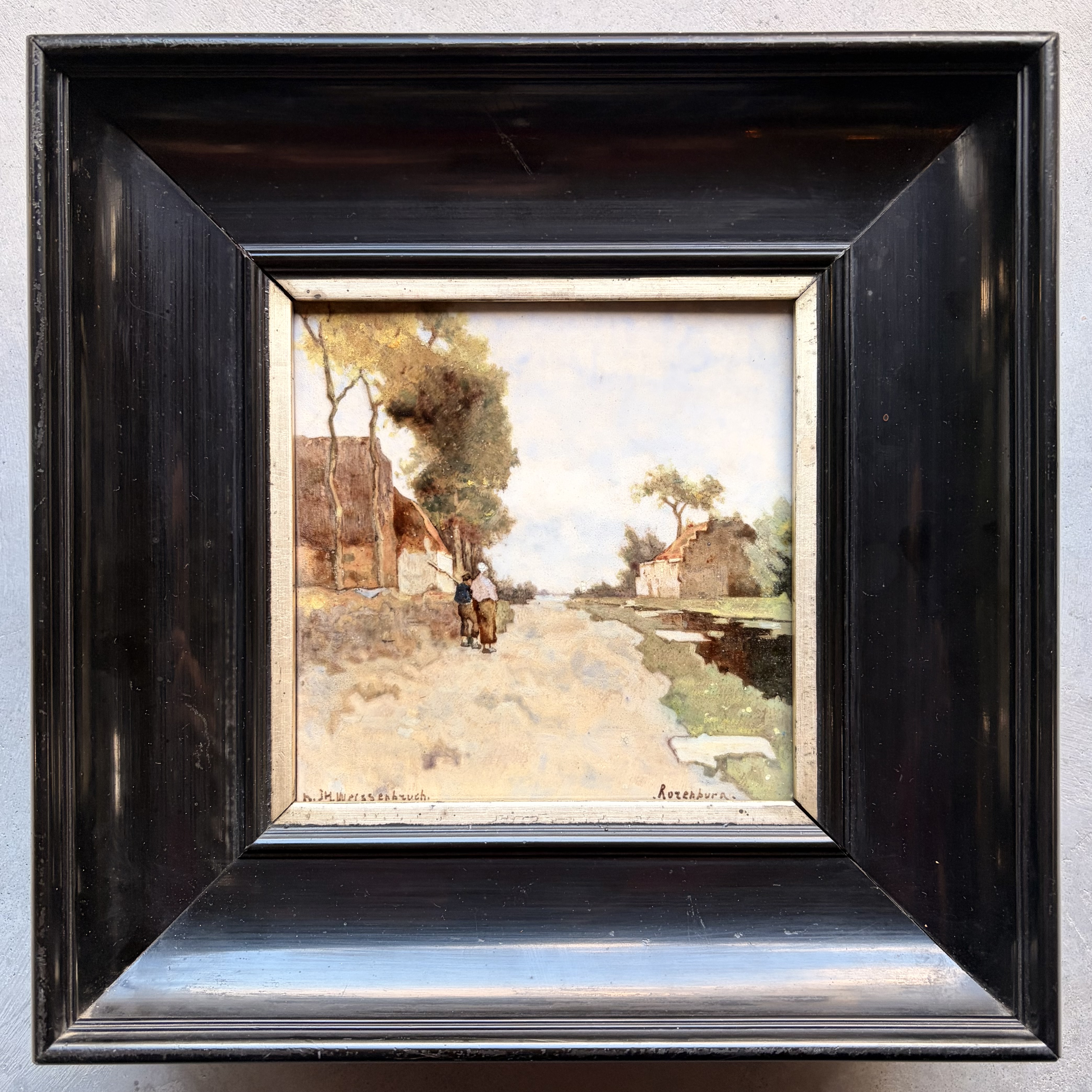
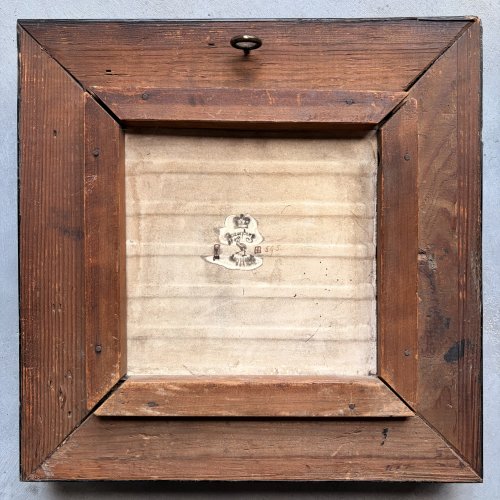
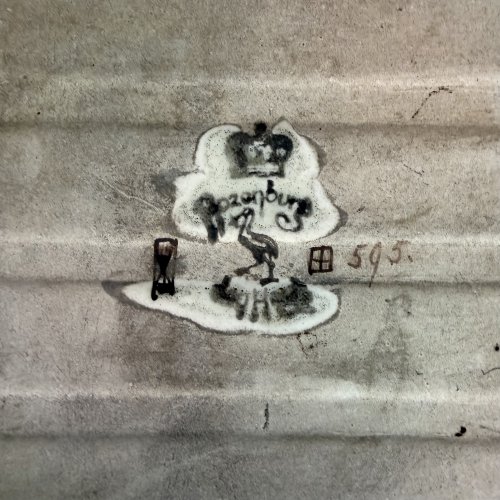
Tile✦ In my collection
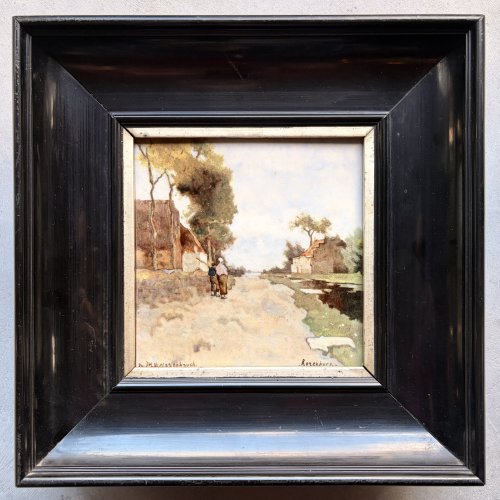
Hollands poldergezicht naar Jan Hendrik Weissenbruch
This tile represents a masterful example of the refined painterly work of The Hague Plateelbakkerij Rozenburg, executed after a painting by Jan Hendrik Weissenbruch. Depicted is an idyllic Dutch polder landscape in which a sandy path winds along a quiet waterway. The composition stands out for its atmospheric composition: on the left side stand picturesque farmhouses with thatched roofs beneath a tall canopy of trees, while on the right a characteristic building stands by the water. On the path two figures walk away from the viewer, which draws the observer, as it were, into the expansive landscape. With a subtle interplay of soft earth tones, reflections in the water and a lightly clouded Dutch sky, the master painter has managed to translate the hushed, rural atmosphere of Weissenbruch's work into glaze in a remarkable way.
About Jan Hendrik Weissenbruch (1824–1903)
Jan Hendrik Weissenbruch holds a prominent place within the Hague School and was known as one of its most gifted and virtuosic landscape painters. He gained great renown with his unparalleled rendering of the Dutch polder landscape, guided by the continuous change of light, air and water. Weissenbruch possessed an unmatched ability to capture the space and atmosphere of the flat land with a loose yet extremely sure touch on canvas and paper. His work is characterized by great clarity and a deep love of nature. Around the turn of the century, the renowned Hague factory Rozenburg translated various iconic works by masters such as Weissenbruch into high-quality ceramic tiles, on which the artistic power of the Hague School was permanently immortalized.
From the work order book
For every work order, Rozenburg recorded what was made, who painted it, when it went into the kiln and what it cost. This is what the work order book tells us about work order 595.
What was made
Tiles
12 pieces
12 approved after firing
Who painted it
Limburg, Antonius Hendricus
Painter in 1907
Beekman, Christiaan Hendrik
Painter in 1907
Painters' wages for this work order, together: ƒ16.28. Paid over 3 weeks.
What it cost
ƒ1.85
cost price per piece
74%
18%
- Biscuit (the unpainted body)ƒ1.205%
- Painter's wagesƒ16.2874%
- Paint and glazesƒ4.0718%
- Firing (coal and wages)ƒ0.532%
From order to kiln
- 27 Sep 1907Work order entered
- 4 OctPainter's wages paidƒ4.00
- 7 OctGlazed5 pieces
- 11 OctPainter's wages paidƒ5.96
- 14 OctGlazed1 piece
- 18 OctPainter's wages paidƒ6.32
- 21 OctGlazed6 pieces
- Fired in kiln 18· 12 approved
From order to the last step recorded in the book: 24 days.
Source: work order book 710, part 1, page 95 of the Rozenburg pottery, The Hague Municipal Archives (access 0249-01). How these data were compiled ›