Work order 1016
- Year mark
- Mier (1901)
- Dating
- October 7, 1901
- Order book
- 707, part 2, page 11
- Painter(s)
- Kerkhof, Martinus
Soonius, Lodewijk - Order
- Tiles · 23 pieces
- Cost price
- ƒ1.65 per piece · What it cost ↓
Objects (1)
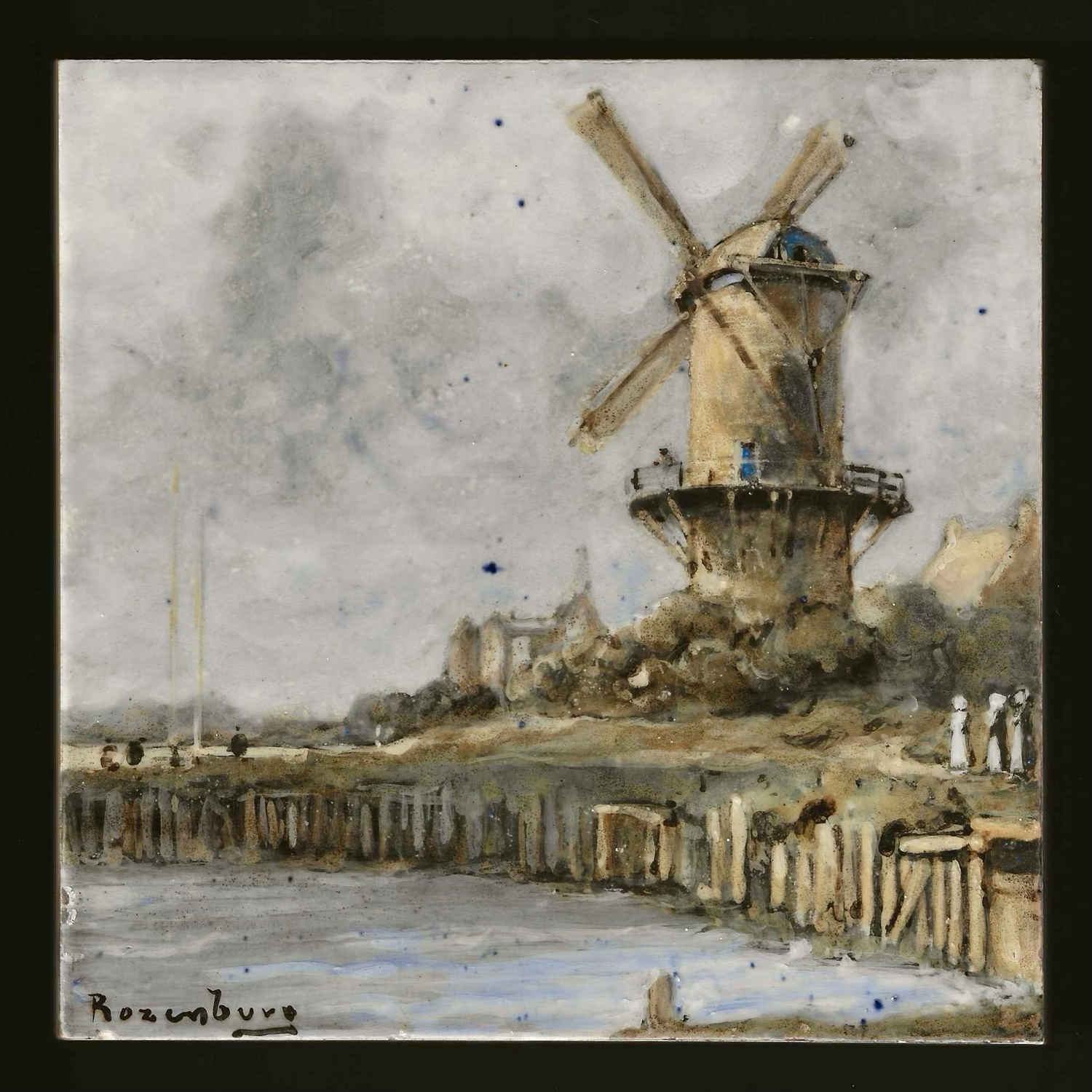
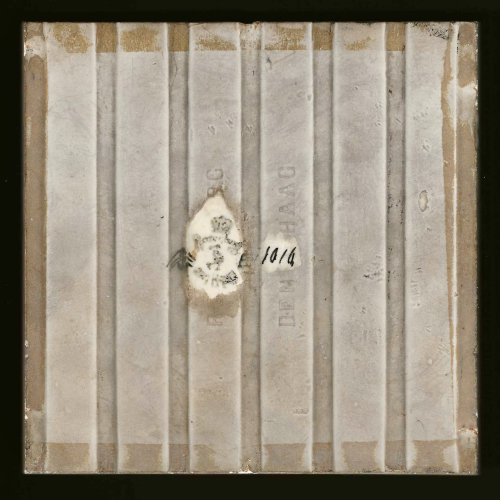
Tile✦ In my collection
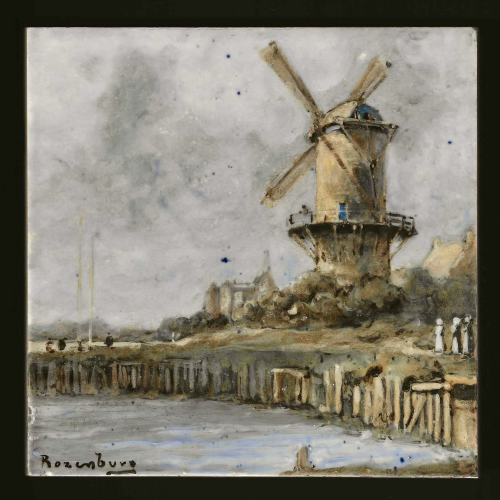
De molen bij Wijk bij Duurstede naar Jacob van Ruisdael
This tile from the Rozenburg Porcelain and Pottery Factory depicts one of the most famous masterpieces in Dutch painting: The Windmill at Wijk bij Duurstede, originally painted by Jacob van Ruisdael around 1670.
What is depicted?The scene is dominated by an imposing round stone tower mill rising high above the river Lek at Wijk bij Duurstede. Characteristic elements include the heavy cloudscape, the reflecting water in the foreground with wooden revetments, and the silhouettes of passing ships. The painters at Rozenburg beautifully translated Ruisdael’s masterful interplay of light, shadow, and monumental Dutch skies onto earthenware.
Background on the original work and the windmillThe original painting: Ruisdael’s masterpiece hangs in the Rijksmuseum in Amsterdam and is considered an absolute icon of 17th-century Dutch landscape art.
The actual windmill: The mill in the painting was named Rijn en Lek, a stone flour mill located near the city walls and moat of Wijk bij Duurstede. Although the original mill from Ruisdael's era was demolished in the 19th century, a historic tower mill built atop one of the old city gates still stands just a stone’s throw from the original location.
From the work order book
For every work order, Rozenburg recorded what was made, who painted it, when it went into the kiln and what it cost. This is what the work order book tells us about work order 1016.
What was made
23 approved after firing
Who painted it
Painters' wages for this work order, together: ƒ24.66. Paid over 6 weeks.
What it cost
- Biscuit (the unpainted body)ƒ2.306%
- Painter's wagesƒ24.6666%
- Paint and glazesƒ8.2222%
- Firing (coal and wages)ƒ2.086%
From order to kiln
- 4 Oct 1901Painter's wages paidƒ7.08
- 7 OctWork order entered
- 14 OctGlazed7 pieces
- 18 OctPainter's wages paidƒ9.90
- 21 OctGlazed11 pieces
- 8 NovPainter's wages paidƒ4.08
- 11 NovGlazed3 pieces
- 15 NovPainter's wages paidƒ0.96
- 18 NovGlazed2 pieces
- 20 NovGlazed1 piece
- 22 NovPainter's wages paidƒ0.84
- 29 NovPainter's wages paidƒ1.80
- 29 NovGlazed4 pieces
- Fired in kiln 18· 10 approved
- Fired in kiln 20· 9 approved
- Fired in kiln 21· 4 approved
From order to the last step recorded in the book: 53 days.
Source: work order book 707, part 2, page 11 of the Rozenburg pottery, The Hague Municipal Archives (access 0249-01). How these data were compiled ›