Tile panel
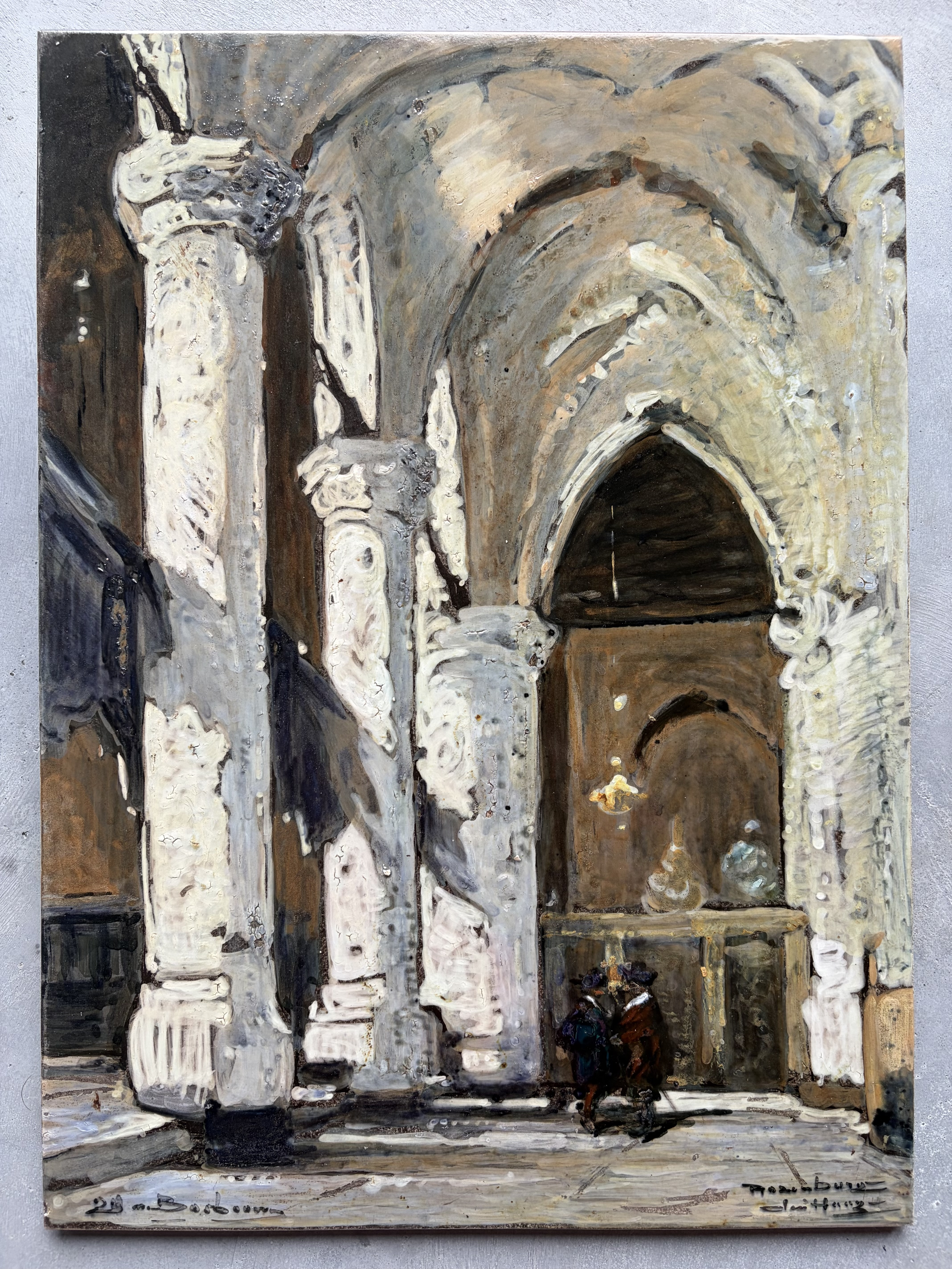
Interior of the Sint-Jacobs Church in The Hague - after Bosboom
- Work order
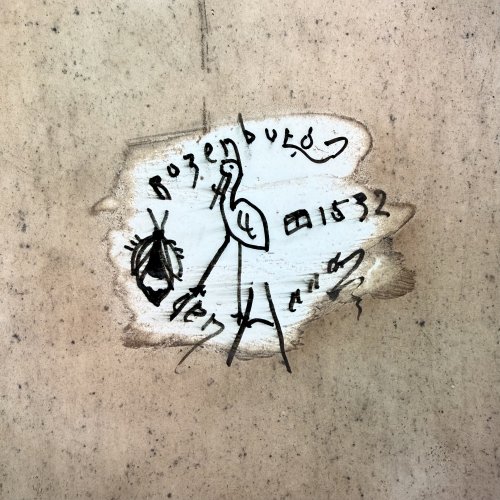
- Work order 1532 · book 706, p. 86
- Painter
- Harkink, Daniël
- Year mark
- Bij (1900)
- Dimensions
- H 41 cm × B 30 cm
- Condition
- Excellent
Description
This tile forms a powerful and expressive example of the way Rozenburg succeeded in translating Johannes Bosboom's more picturesque touch into ceramics. In contrast to the more detailed panoramic works, this vertical composition focuses on a more intimate, monumental fragment of the interior of The Hague's Sint-Jacobskerk. The emphasis lies on the robust, articulated pylons and pointed arches that capture the dramatic play of light and shadow. With broad, assured strokes and a pasty glaze application, the rough texture of the weathered stone pylons and the imposing vault construction is masterfully rendered. Two small figures in seventeenth-century dress by the wooden wainscoting in the background lend the work scale and reinforce the serene, timeless atmosphere. This tile demonstrates the freer, almost impressionistic side of the oeuvre of the master painters at Rozenburg.
About Johannes Bosboom (1817–1891)
Johannes Bosboom is regarded as one of the most important precursors and masters of the Hague School. He achieved international renown with his atmospheric depictions of church interiors, inspired by seventeenth-century Old Masters such as Emmanuel de Witte and Rembrandt. Like no other, Bosboom captured the unique light, the stillness and the airy space of historic Dutch churches on canvas and paper. His style varied from assured and sketchy to extremely refined and detailed. Around the turn of the century, the Hague factory Rozenburg issued a series of high-quality earthenware tiles on which Bosboom's iconic church interiors were translated and immortalized in glaze with remarkable precision.